
Quick answer
Federal agencies studied recycled tire crumb on playing fields and found that, although chemicals are present in the rubber and people can be exposed, the exposures are likely limited — while noting the work is not a full risk assessment. The playground side is still being studied by the U.S. Consumer Product Safety Commission.
What rubber mulch and crumb rubber are
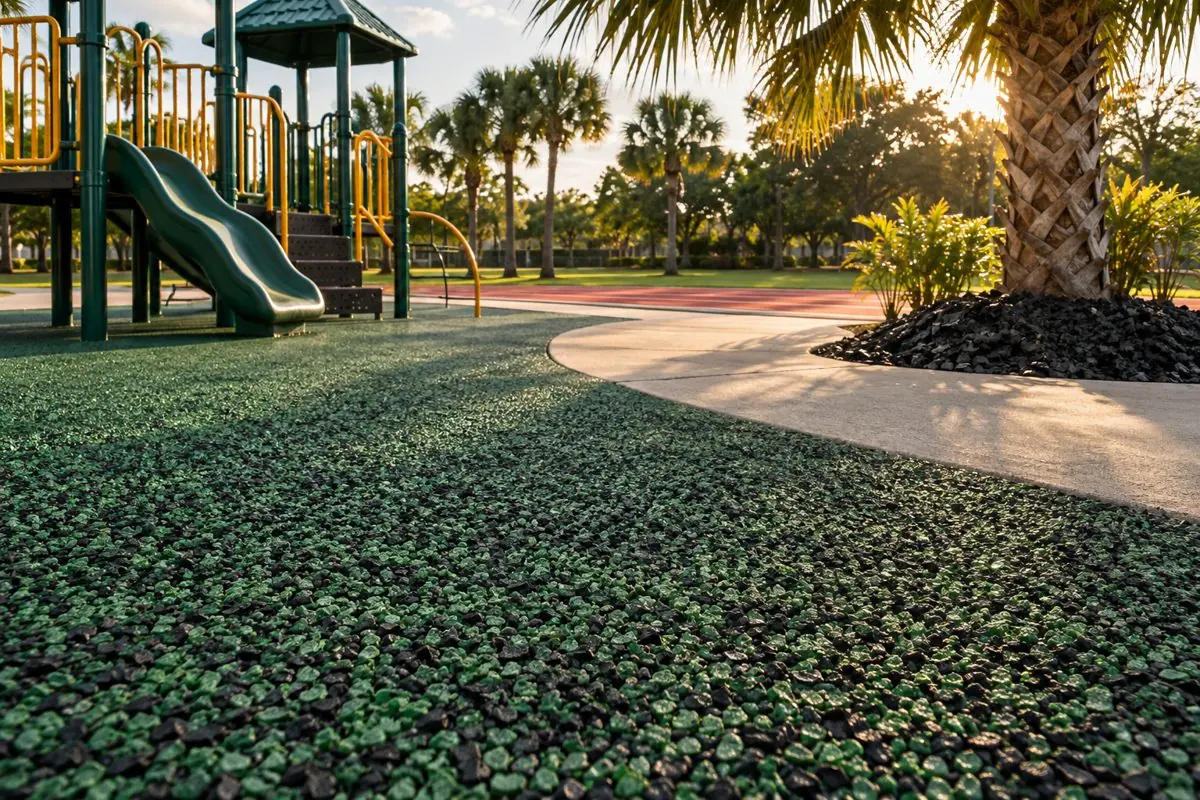
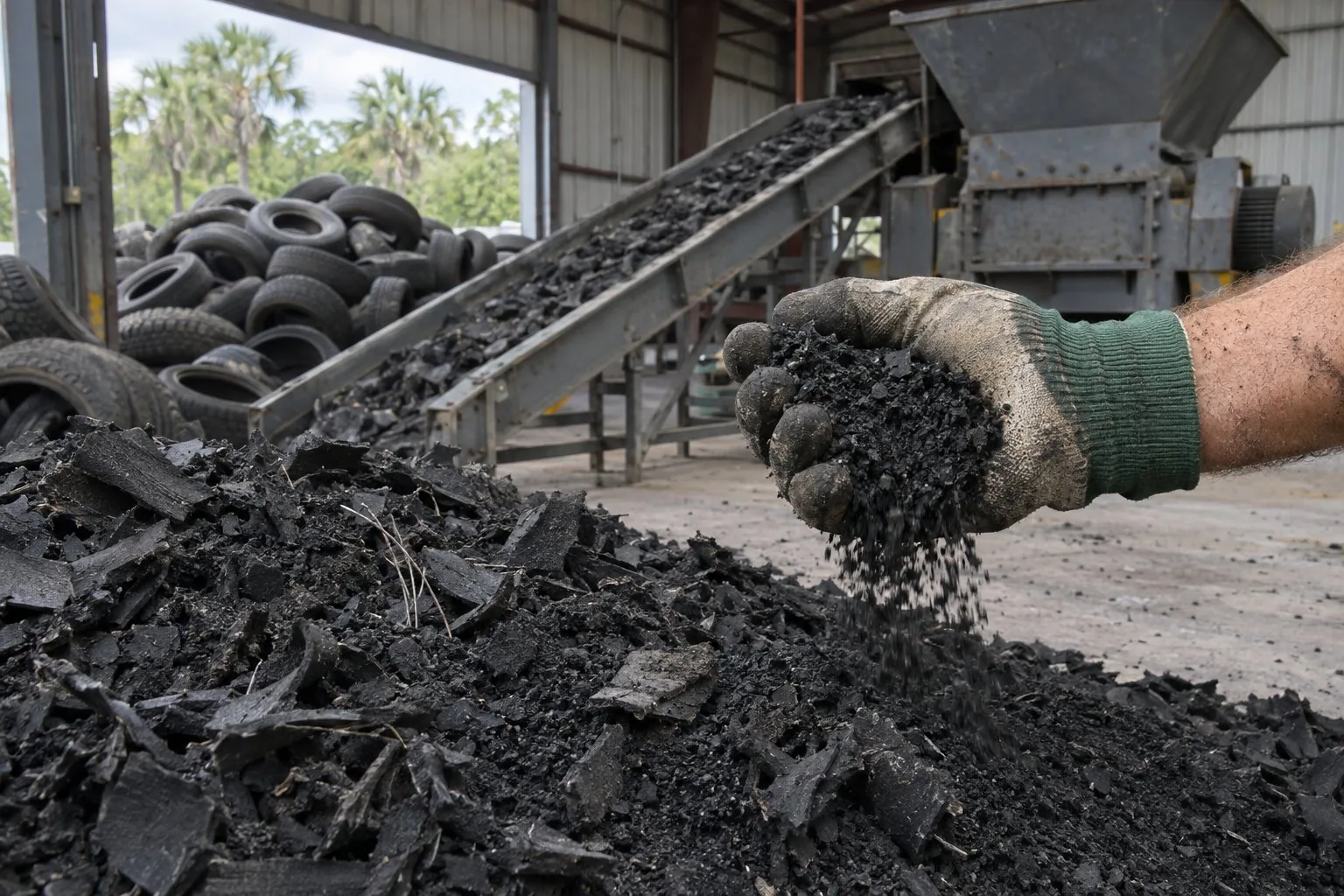
When a scrap tire reaches a processing plant, it is shredded and the steel belts and bead wire are pulled out. What’s left is rubber. Cut into chunky pieces, it becomes rubber mulch for landscaping and playgrounds. Ground smaller, it becomes crumb rubber — the black granules in artificial turf, poured playground surfaces, running tracks and rubberized asphalt. The other big road is tire-derived fuel, burned in cement kilns and mills in place of coal.
We walk through the whole chain, from our counter to the shredder, in how tires are actually recycled.
About three-quarters of U.S. scrap tires reach end-use markets like these, per the U.S. Tire Manufacturers Association.
What the federal research found
Concern about crumb rubber led several federal agencies to study it together under a research plan on recycled tire crumb used on playing fields and playgrounds. According to the U.S. EPA’s page on that research:
- The second part of the report, released in April 2024, completes the EPA and ATSDR work on playing fields.
- The finding, in EPA’s words: although chemicals are present (as expected) in the tire crumb rubber and exposures can occur, they are likely limited.
- EPA is clear that these reports together are not a risk assessment.
- For playgrounds, the U.S. Consumer Product Safety Commission is continuing the work with a risk assessment of children’s exposure.
That is the honest state of things: studied, reassuring so far for playing fields, not a final word, and still open for playgrounds. Anyone who tells you it is proven perfectly safe — or proven dangerous — is getting ahead of the research.
Pros and cons for a Florida yard
If you are thinking about rubber mulch at home, here is the practical side as we see it:
- It lasts. Rubber doesn’t rot like wood mulch, so you don’t replace it every season.
- It doesn’t feed the soil. Wood mulch breaks down and adds organic matter; rubber doesn’t. Gardeners who want healthier soil usually stick with wood or pine straw.
- It gets hot. Dark rubber in full Florida sun warms up more than lighter mulches.
- It is hard to get out. Small pieces work into the soil and grass, so think of it as a long-term choice.
- Playgrounds have their own standards. Public playground surfacing is covered by CPSC safety guidance and industry standards for depth and fall protection — a homeowner spreading a few bags is not the same thing.
Can I make rubber mulch from my own tires?
Not really, and we’d ask you not to try. Turning a tire into mulch takes an industrial shredder strong enough to cut through steel belts, plus magnets and screens to pull the wire out. Cutting tires up at home with a saw leaves sharp steel ends, and a half-cut tire in the yard still collects rainwater like a whole one.
There is also the law. In Florida a tire that has come off a vehicle for good is a waste tire, and the state wants it to reach a permitted facility. The rubber mulch you can buy in a bag already went through that chain. If you want to put your old tires to good use, the shortest path is to hand them to a licensed recycler and let the plant do the rest.
Where your tires actually go
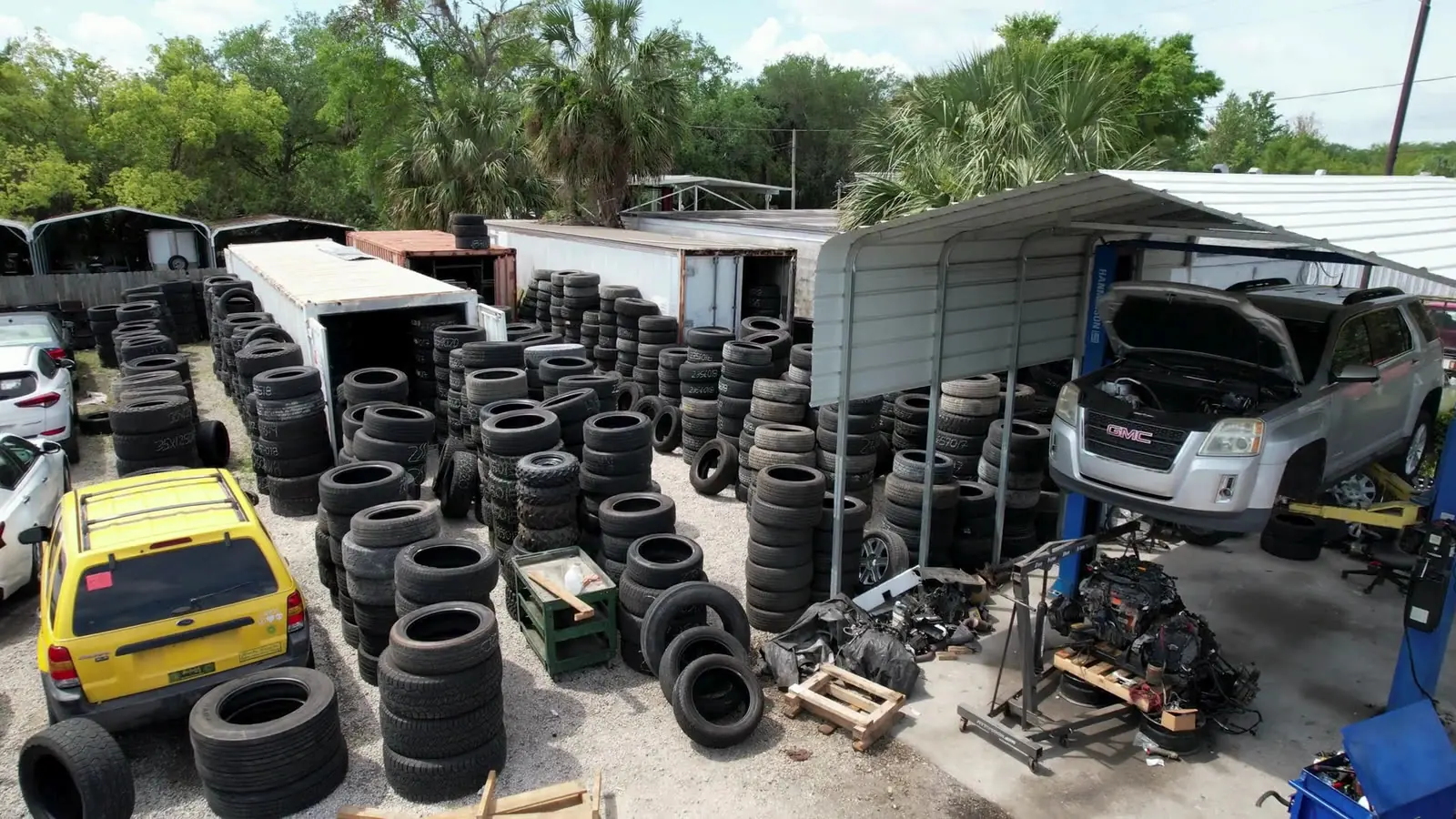
For most of our customers the real question is simpler: does my old tire end up somewhere useful? Yes — when it goes through the right door. In Florida a whole waste tire may not be buried in a landfill, so a tire that reaches a permitted facility is headed for shredding, fuel, crumb rubber or a retread, not a hole in the ground. The U.S. Tire Manufacturers Association reports that about three-quarters of U.S. scrap tires reach end-use markets.
The tire that does harm is the one that never reaches a facility: the one dumped in the woods, filling with rainwater. Our complete Florida tire recycling guide covers every step, and drop-off at our Apopka counter is $3 a tire.
Questions people ask
Is rubber mulch made from tires safe?
Federal research on tire crumb used on playing fields found chemicals are present and exposure can occur, but exposures are likely limited; EPA notes this is not a full risk assessment. The playground side is still being assessed by the U.S. Consumer Product Safety Commission.
What is crumb rubber?
Scrap tire rubber ground into small granules after the steel is removed. It is used in artificial turf, poured playground surfaces, running tracks and rubberized asphalt.
Is rubber mulch good for gardens?
It lasts for years and doesn’t rot, but it adds nothing to the soil, gets hot in full sun and is hard to remove. Many gardeners prefer wood mulch or pine straw for planting beds.
Do recycled tires really get reused?
When they reach a permitted facility, yes. About three-quarters of U.S. scrap tires reach end-use markets, according to the U.S. Tire Manufacturers Association.
Sources
- U.S. EPA — Federal research on recycled tire crumb used on playing fields and playgrounds
- Florida DEP — Waste Tires
- Florida Statute 403.717 — Waste tire and lead-acid battery requirements
Official pages read 2026-11-21.
Ruben Feliz
Owner and licensed operator of Feliz Family Recycling LLC in Apopka (WACS #108814). The Feliz family has worked with tires in Central Florida since 1994; Ruben reviews every guide on this site.